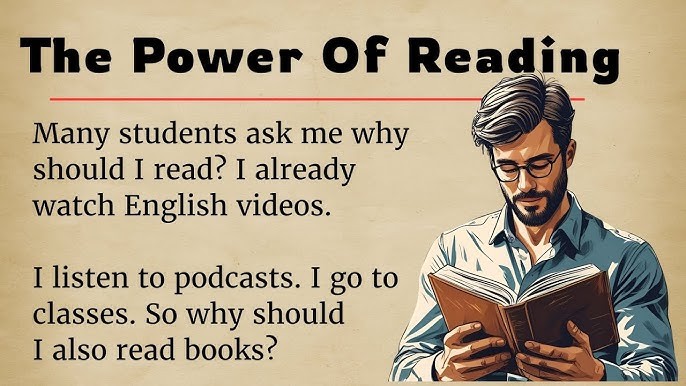
Reading is one of the most powerful habits a student can cultivate—not just for academic success, but for personal and professional growth. It’s more than a skill; it’s a gateway to deeper thinking, broader perspectives, and sharper communication. In a world that increasingly values speed and surface-level engagement, reading offers a counterbalance. It invites students to slow down, absorb, and reflect. And while it may seem like a solitary activity, its impact ripples outward, influencing how students write, speak, analyze, and lead.
At its core, reading builds cognitive flexibility. When students engage with diverse texts—whether fiction, nonfiction, or technical material—they’re exposed to different ways of thinking. They learn to follow complex arguments, recognize nuance, and evaluate evidence. This kind of mental agility is essential in business, where decisions often hinge on interpreting data, understanding context, and anticipating consequences. A student who regularly reads well-structured articles or books develops an intuitive sense for logic and flow, which translates into clearer writing and more persuasive presentations.
Reading also strengthens vocabulary and comprehension, which are foundational to effective communication. Students who read widely tend to express themselves with greater precision and confidence. They’re more likely to understand subtle distinctions in meaning and tone, which helps them navigate professional conversations and craft compelling messages. A business student who reads case studies, biographies, and industry reports will naturally absorb the language of strategy, leadership, and innovation. That fluency becomes a competitive advantage, especially in environments where clarity and persuasion matter.
Beyond language, reading fosters empathy and emotional intelligence. Stories—whether fictional or real—offer windows into other lives, cultures, and experiences. They challenge assumptions and expand understanding. For students preparing to enter diverse workplaces, this emotional insight is invaluable. It helps them collaborate across differences, manage conflict, and lead with compassion. A student who reads memoirs or global literature isn’t just learning about others—they’re learning how to relate, how to listen, and how to see beyond their own perspective.
Reading also cultivates discipline and focus. In an age of constant distraction, the ability to concentrate deeply is increasingly rare. Students who make time for reading develop the habit of sustained attention. They learn to engage with complex material without immediately seeking shortcuts or summaries. This discipline carries over into study habits, project management, and professional development. A student who reads a challenging book over several weeks is practicing patience, persistence, and self-direction—all traits that contribute to long-term success.
Importantly, reading fuels curiosity. It introduces students to ideas they hadn’t considered, fields they hadn’t explored, and questions they hadn’t asked. That curiosity is the engine of innovation. Students who read beyond their syllabus often stumble upon connections that spark new projects, research interests, or career paths. A finance major who reads about behavioral psychology might develop a passion for consumer insights. A tech student who reads about ethics might become a thoughtful voice in AI development. Reading doesn’t just inform—it inspires.
In academic settings, reading is often treated as a requirement, something to be checked off before exams or essays. But when students shift their mindset and see reading as a resource rather than a chore, everything changes. They begin to read with purpose, choosing texts that align with their goals, interests, and values. They seek out authors who challenge them, topics that stretch them, and formats that suit their style. This intentional approach turns reading into a strategic tool for growth.
Even in business education, where numbers and models often dominate, reading plays a critical role. It helps students understand the human side of enterprise—the motivations, dilemmas, and dynamics that shape decisions. Reading about leadership, negotiation, or organizational behavior provides context that spreadsheets alone can’t offer. It adds depth to analysis and texture to strategy. A student who reads about the rise and fall of companies gains insight into risk, resilience, and reinvention. That kind of understanding can’t be taught through formulas—it has to be felt through stories.
Ultimately, every student should be a reader because reading is a form of self-investment. It sharpens the mind, expands the heart, and equips the voice. It prepares students not just to pass exams, but to contribute meaningfully in whatever field they choose. It’s not about reading everything—it’s about reading enough to think critically, communicate clearly, and lead thoughtfully. In a world that rewards quick answers and instant results, reading reminds us that depth still matters. And for students who want to grow—not just academically, but professionally and personally—there’s no better habit to build.