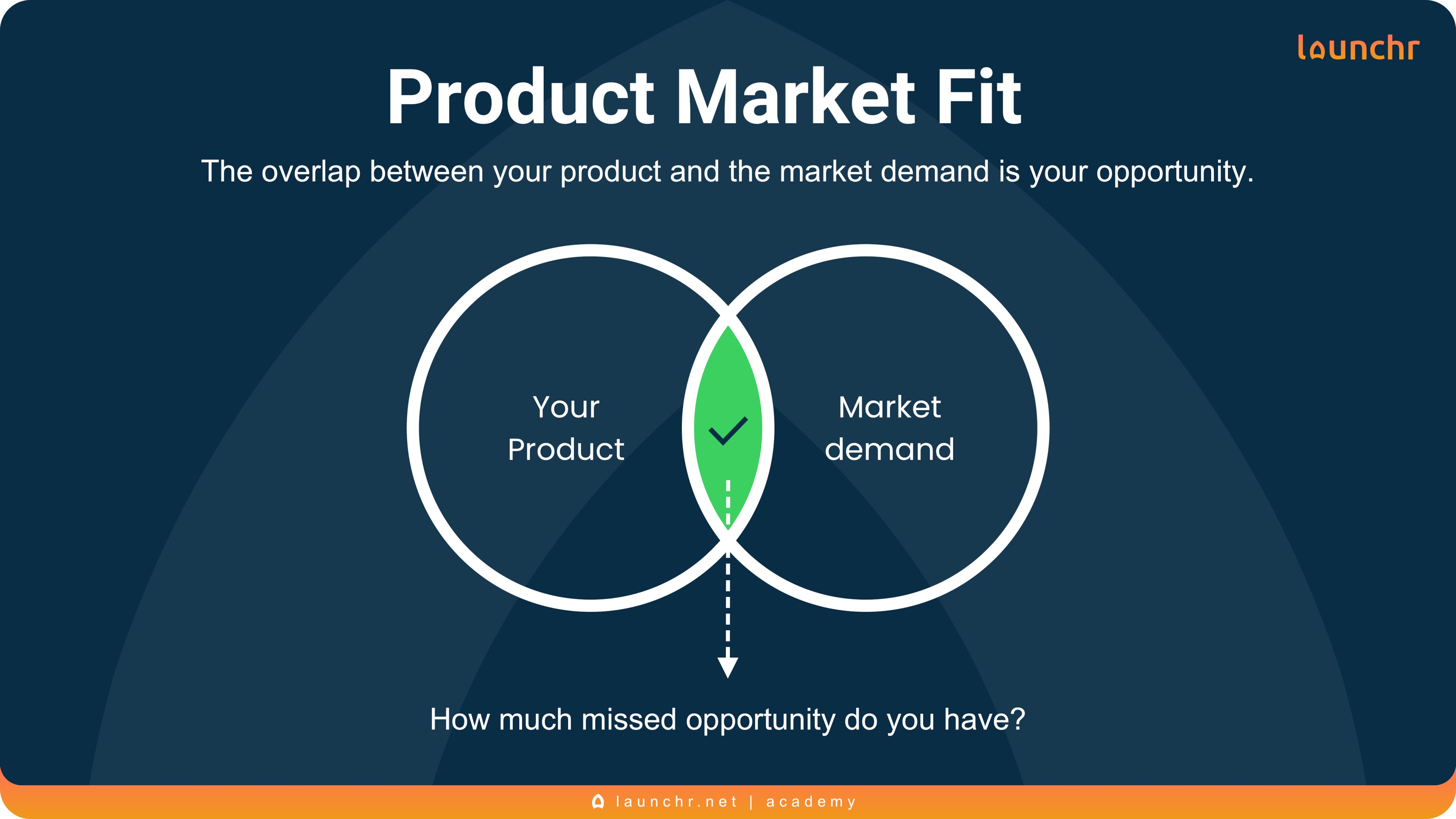
In the often-turbulent journey of building a successful startup, there’s a concept frequently championed by venture capitalists and seasoned entrepreneurs alike, yet it remains elusive and sometimes misunderstood: product-market fit. Coined by Marc Andreessen, a prominent figure in the tech world, product-market fit essentially means being in a good market with a product that can satisfy that market. It’s the sweet spot where your offering truly resonates with a substantial customer base, leading to organic growth, high retention, and a palpable sense that you’ve built something customers genuinely want and need. Achieving product-market fit is not just a milestone; it’s the fundamental prerequisite for sustainable growth and a primary indicator that a business has found its true footing.
Defining product-market fit isn’t about hitting a specific revenue target or reaching a certain number of users, though these can be symptoms of it. Instead, it’s a qualitative feeling, an undeniable momentum that emerges when a product effectively solves a real problem for a significant segment of the market. You know you’ve achieved it when customers are clamoring for your product, usage is growing rapidly without excessive marketing spend, retention rates are high, and word-of-mouth becomes your most powerful acquisition channel. It’s when users get significant value from your product, tell others about it, and continue to use it. Think of early Facebook users who couldn’t imagine life without it, or Uber riders who swiftly adopted the convenience of ride-sharing. Their deep engagement and enthusiastic recommendations were clear signals of product-market fit.
The path to product-market fit is rarely linear and often involves a great deal of experimentation and iteration. It begins with a deep understanding of your target market. This involves more than just demographic data; it requires empathetic insights into their pain points, unmet needs, desires, and the existing solutions they currently employ (or struggle with). This foundational research helps in identifying a market segment that is large enough to sustain a business and has a significant problem that your product aims to solve. Without a well-defined market and a clear problem statement, even the most innovative product is essentially a solution looking for a problem, destined to wander without direction.
Once a potential market and problem are identified, the next step involves building a Minimum Viable Product (MVP). An MVP is not a fully polished, feature-rich offering, but rather the simplest version of your product that can deliver core value and address the identified pain point. The purpose of the MVP is to test your fundamental hypotheses about the market and the product’s solution with real users as quickly and efficiently as possible. For instance, if you’re building a new project management tool, your MVP might only include task assignment and due date tracking, rather than advanced reporting or team collaboration features. The goal is to gather initial feedback, observe user behavior, and validate whether the core solution resonates.
The iterative feedback loop is central to achieving product-market fit. After launching the MVP, the focus shifts to collecting continuous and honest feedback from early adopters. This isn’t just about surveys; it involves qualitative interviews, usage analytics, and observing how users interact with the product. Are they using it frequently? Are they expressing frustration or delight? Are they recommending it to others? This feedback provides crucial insights into what’s working, what’s confusing, and what additional features might be truly valuable. Based on these insights, the product is then refined, features are added or removed, and the value proposition is sharpened. This cycle of building, launching, measuring, and learning continues until the product truly clicks with its market.
A key indicator of product-market fit is often high retention rates. If users try your product and then quickly churn, it suggests that while you might have attracted them, you haven’t managed to retain them because the product isn’t solving a sufficiently important problem or isn’t doing so effectively. Conversely, high retention, even with a relatively small user base, can be a stronger signal of product-market fit than rapid, but short-lived, user acquisition. When users consistently return to your product, it implies they derive sustained value from it, a clear sign that you’re satisfying a genuine need.
Furthermore, a significant sign of product-market fit is when your customer acquisition costs begin to decrease, and organic growth, primarily driven by word-of-mouth, becomes a dominant force. When customers are so satisfied that they spontaneously tell their friends, colleagues, or social networks about your product, it indicates that you’ve transcended mere utility and achieved true user delight. This organic spread is the most cost-effective form of marketing and a powerful validation that your product is truly resonating.
In essence, product-market fit is the critical moment when a startup transitions from hypothesis to validation, from building something *you think* people want to building something they undeniably *need*. It’s a state of alignment where the market eagerly pulls the product from your hands. While the journey to get there can be arduous, marked by pivots and setbacks, achieving product-market fit unleashes powerful compounding effects: delighted users attract more users, revenue grows, and the business gains the momentum required for truly scalable and sustainable success. It is the north star for early-stage companies, and its attainment signals that the arduous groundwork has paid off, paving the way for the exciting challenge of scaling a validated solution.