In today’s fast-paced, information-saturated world, how we learn has become just as important as what we learn. Among the many approaches to understanding and retaining new material, visual learning stands out as one of the most effective, especially in business and professional settings where clarity, speed, and retention are crucial. Visual learning techniques leverage the brain’s natural ability to process and remember images better than text alone, creating a more engaging and impactful experience for learners of all types.
At its core, visual learning involves using imagery—such as diagrams, charts, infographics, videos, and spatial maps—to convey information. This isn’t a new idea. For centuries, educators and communicators have used illustrations to explain complex ideas. But what’s changed is how much more accessible and interactive these visual tools have become, thanks to advances in technology and our deepening understanding of cognitive science. The result is a learning method that doesn’t just help people absorb more information, but does so in a way that often feels more intuitive and less overwhelming.
One of the key advantages of visual learning is its ability to break down complex concepts into digestible formats. In business, ideas are rarely simple. Whether you’re explaining a new workflow to your team, presenting quarterly results to stakeholders, or training staff on a new piece of software, chances are you’re dealing with information that’s both detailed and interconnected. A well-designed visual—like a flowchart or a data visualization—can provide a snapshot of that complexity in a form that’s easier to comprehend at a glance. It doesn’t just make the information more accessible; it also allows the viewer to see the relationships between different elements more clearly.
For example, consider the difference between reading a paragraph about customer journey mapping versus looking at a visual journey map. The former requires more time and mental effort to parse, while the latter can instantly communicate the key touchpoints, emotions, and actions a customer experiences. That immediate understanding saves time and reduces the risk of misinterpretation, which can be especially valuable in high-stakes business environments where decisions need to be made quickly and collaboratively.
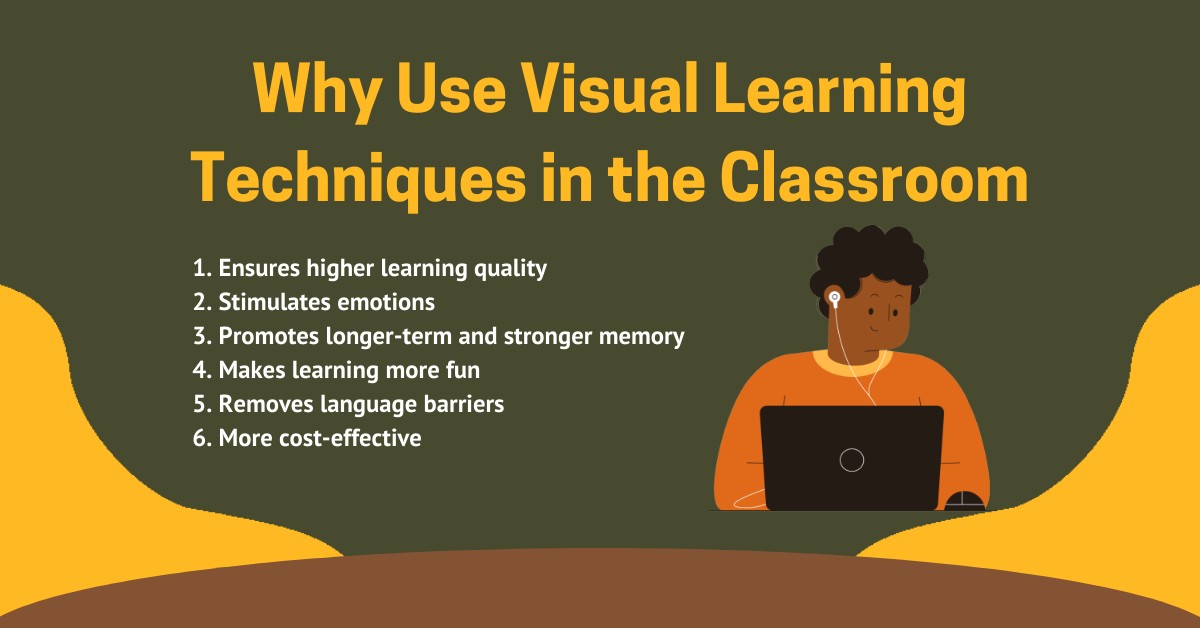
Retention is another area where visual learning shows its strength. Studies consistently show that people remember visual information better than written or spoken content. This is partly due to the brain’s ability to store visuals in long-term memory more effectively. When someone sees a compelling infographic or video demonstration, they’re more likely to recall that content later compared to reading a block of text. This can lead to more informed decision-making, better performance, and fewer mistakes over time.
The benefits also extend to communication across teams. In a globalized workplace, where employees may have different native languages or educational backgrounds, visuals offer a more universal form of communication. A process diagram, for instance, can transcend linguistic barriers and serve as a common reference point for everyone involved. This not only improves collaboration but can also create a more inclusive learning environment where all employees feel empowered to engage with the material.
Moreover, visual learning techniques cater to different learning preferences. While not everyone identifies strictly as a visual learner, nearly everyone benefits from some level of visual support. It adds an extra layer of reinforcement that complements verbal or written instruction. In meetings or training sessions, the presence of visuals can keep attention focused and prevent cognitive fatigue. Instead of tuning out after a few minutes of verbal instruction, learners stay engaged because their brains are actively making connections between words, images, and concepts.
Technology has played a significant role in making visual learning more dynamic and versatile. Tools like whiteboard animation software, data dashboards, and augmented reality apps allow educators and business leaders to create interactive visuals that do more than just decorate a presentation. These tools encourage exploration and experimentation, letting learners manipulate data, test scenarios, or watch processes unfold in real time. This kind of interactivity transforms passive learning into active problem-solving, which tends to yield better outcomes.
Even in routine business communication, integrating visual elements can elevate the message. A pitch deck with clean, well-structured visuals conveys professionalism and clarity. A project update that includes a timeline or Gantt chart helps team members quickly understand progress and next steps. In both cases, the visuals don’t just support the message—they become an integral part of how the message is received and acted upon.
That said, effective visual learning isn’t just about throwing images into your content. The quality and relevance of the visuals matter greatly. Poorly designed graphics or cluttered visuals can confuse rather than clarify. The key is intentionality—choosing or creating visuals that genuinely enhance understanding and align with the learning objectives. When done right, even a simple sketch on a whiteboard can have a profound impact on how people absorb and engage with information.
In summary, visual learning techniques offer a powerful way to enhance comprehension, retention, and collaboration in professional settings. By tapping into the brain’s natural strengths and leveraging modern tools, visual learning transforms abstract ideas into something concrete and memorable. Whether you’re training a team, pitching an idea, or analyzing performance metrics, incorporating strong visuals can turn your communication into a more effective and lasting experience. As the business world continues to grow more complex, the ability to communicate clearly—and quickly—will only become more valuable, and visual learning is one of the best tools we have to meet that challenge.