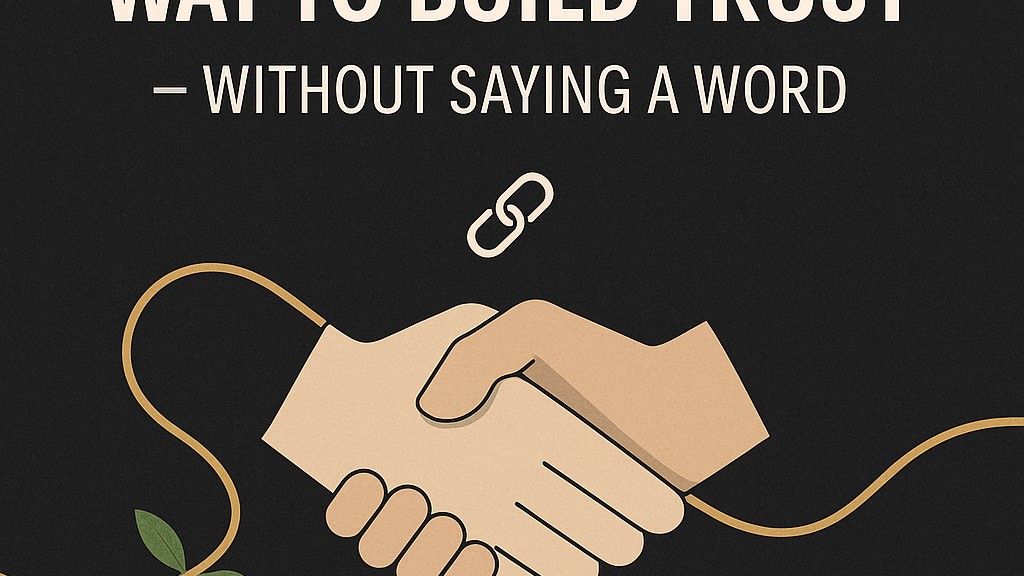
Trust is often thought of as something built through words—promises made, commitments honored, and conversations held with sincerity. But in business, some of the most powerful signals of trust are nonverbal. Long before a word is spoken, people begin forming impressions based on body language, behavior, and presence. These silent cues can either reinforce credibility or quietly erode it. For leaders and professionals alike, understanding how to build trust without saying a word is not just a soft skill—it’s a strategic advantage.
The way someone enters a room can speak volumes. A confident posture, steady eye contact, and a calm demeanor immediately convey assurance and openness. People instinctively respond to these signals, often without realizing it. When a leader walks into a meeting with composure and attentiveness, it sets a tone of stability. Others feel more secure, more willing to engage, and more likely to believe that the person in front of them is capable and trustworthy. It’s not about being flashy or dominant—it’s about being grounded and present.
Consistency in behavior is another silent builder of trust. When someone’s actions align with their values and expectations over time, others begin to rely on them. This reliability doesn’t require constant verbal affirmation. It’s demonstrated through punctuality, follow-through, and the way one treats others in moments of stress or uncertainty. For example, a manager who consistently respects deadlines and treats team members with fairness—even when under pressure—creates a foundation of trust that words alone could never achieve. People notice patterns, and those patterns shape their sense of safety and confidence.
Physical presence matters, especially in leadership. Being visible and accessible sends a message of engagement. When leaders make time to walk the floor, attend team events, or simply be available, it shows that they care. These moments don’t need to be filled with speeches or directives. Sometimes, just being there—listening, observing, and acknowledging others—can foster a sense of connection and trust. Employees often feel more valued when they see that leadership is not removed or distant, but actively involved in the rhythm of the organization.
Facial expressions are another powerful tool. A genuine smile, a look of concern, or a nod of understanding can communicate empathy and attentiveness. These expressions create emotional resonance, helping others feel seen and understood. In negotiations, for instance, a calm and open expression can defuse tension and invite collaboration. In team settings, a leader’s ability to mirror the emotions of their group—without exaggeration or artifice—can build rapport and reinforce psychological safety. Trust grows when people feel emotionally aligned, and that alignment often begins with a look, not a word.
Gestures and posture also play a role in silent communication. Open gestures—such as uncrossed arms, relaxed hands, and forward-leaning posture—signal receptiveness and engagement. Closed or defensive body language can create distance, even if the words being spoken are positive. Professionals who are mindful of their physical cues can create environments that feel more inclusive and respectful. For example, during a presentation, a speaker who maintains eye contact and uses open gestures is more likely to be perceived as credible and trustworthy than one who avoids eye contact or appears rigid.
Trust is also built through the way people handle silence. In business, silence can be uncomfortable, but it can also be powerful. Pausing before responding, allowing space for others to speak, or simply sitting with a moment of reflection can demonstrate thoughtfulness and respect. It shows that someone is not rushing to fill the void with noise, but is willing to listen and consider. This kind of presence—quiet, attentive, and deliberate—can be deeply reassuring. It signals that the person is not just reacting, but truly engaging.
Environment and appearance contribute to nonverbal trust-building as well. A tidy workspace, appropriate attire, and attention to detail all send messages about professionalism and care. These elements may seem superficial, but they influence perception. When someone presents themselves with intention, it suggests that they take their role seriously and respect those around them. In client-facing roles, these cues can make the difference between a first impression that inspires confidence and one that raises doubts.
Even the way people use technology can affect trust. In meetings, checking a phone or laptop constantly can signal distraction or disinterest. Conversely, putting devices aside and giving full attention to others shows respect and priority. In virtual settings, maintaining eye contact through the camera, minimizing background noise, and showing up on time all contribute to a sense of reliability and professionalism. These small behaviors, repeated consistently, build a reputation that others come to trust.
Ultimately, building trust without saying a word is about alignment—between intention and action, presence and perception. It’s about showing up in a way that communicates integrity, empathy, and reliability. While words can clarify and reinforce trust, it’s the silent signals that often lay the foundation. In business, where relationships drive results and credibility opens doors, mastering the art of nonverbal trust-building is not just beneficial—it’s essential. The most trusted leaders and professionals are those who understand that trust begins long before the first word is spoken. It begins with how you show up, how you carry yourself, and how you make others feel in your presence.