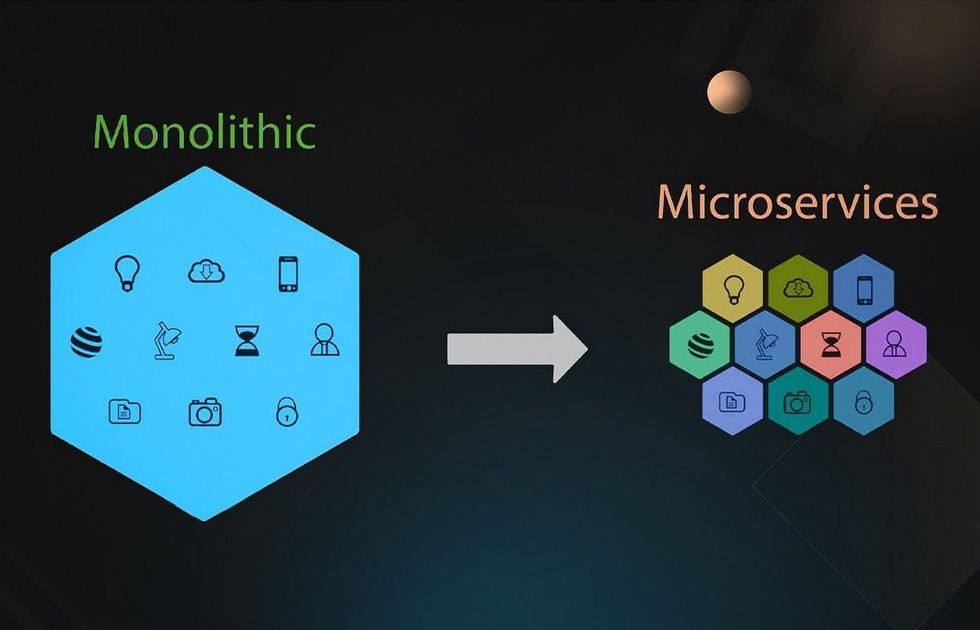
The evolution from monolithic architecture to microservices represents one of the most significant shifts in modern software development. For decades, monolithic applications were the standard—large, unified codebases where every function, from user interface to business logic to data access, was tightly coupled and deployed as a single unit. This approach worked well in simpler times, when applications were smaller and teams were centralized. However, as systems grew in complexity and user expectations soared, the limitations of monolithic architecture became increasingly apparent. Scalability, maintainability, and agility began to suffer, prompting a rethinking of how software should be structured.
Microservices emerged as a response to these challenges, offering a more modular and flexible approach. Instead of building one massive application, developers create a suite of small, independent services that communicate through APIs. Each microservice is responsible for a specific business function and can be developed, deployed, and scaled independently. This decoupling allows teams to work in parallel, iterate faster, and adopt technologies best suited to each service. For example, a retail platform might have separate microservices for inventory management, payment processing, and customer reviews, each maintained by different teams using different tech stacks. This autonomy accelerates development and fosters innovation.
One of the most compelling advantages of microservices is scalability. In a monolithic system, scaling often means replicating the entire application, even if only one component is under heavy load. With microservices, organizations can scale individual services based on demand. If the checkout process experiences a spike during a sale, only that service needs to be scaled, conserving resources and improving performance. This granular control is particularly valuable in cloud environments, where efficiency translates directly into cost savings. It also supports resilience, as failures in one service are less likely to bring down the entire system.
Deployability is another area where microservices shine. Monolithic applications require coordinated deployments, which can be time-consuming and risky. A small change in one part of the codebase might necessitate retesting and redeploying the entire application. Microservices, on the other hand, enable continuous deployment. Teams can push updates to individual services without affecting others, reducing downtime and accelerating release cycles. This agility is crucial in competitive markets, where the ability to respond quickly to user feedback or emerging trends can be a strategic advantage.
However, the shift to microservices is not without its challenges. The architecture introduces complexity in areas like service discovery, data consistency, and inter-service communication. Managing dozens or even hundreds of services requires robust orchestration and monitoring tools. Security also becomes more nuanced, as each service must be secured individually and communication between services must be protected. Organizations must invest in infrastructure and practices that support this distributed model, such as containerization, automated testing, and centralized logging. The transition demands a cultural shift as well, encouraging collaboration, ownership, and a DevOps mindset.
Data management in microservices requires careful consideration. In monolithic systems, a single database often serves the entire application. Microservices typically use decentralized data stores, with each service managing its own database. This approach enhances autonomy and scalability but complicates transactions and reporting. Ensuring data consistency across services can be challenging, especially in scenarios that require atomic operations. Event-driven architectures and eventual consistency models are often employed to address these issues, but they require a different way of thinking about data integrity and flow.
Despite these complexities, the benefits of microservices are compelling enough that many organizations are making the shift. The transition is often gradual, starting with decomposing parts of a monolith into services or building new features as microservices. This hybrid approach allows teams to learn and adapt without disrupting existing operations. Over time, as confidence and capability grow, more of the system can be refactored into services. The journey requires patience and planning, but the payoff is a more agile, scalable, and resilient architecture.
The move from monolithic to microservices is not just a technical change—it’s a strategic one. It reflects a broader shift toward flexibility, responsiveness, and user-centric design. In a world where software must evolve rapidly and reliably, microservices offer a blueprint for building systems that can keep pace. They empower teams to innovate, reduce risk, and deliver value more consistently. While the path may be complex, the destination is a software ecosystem that is better aligned with the demands of modern business. For organizations willing to embrace the shift, microservices represent not just a new architecture, but a new way of thinking about software itself.