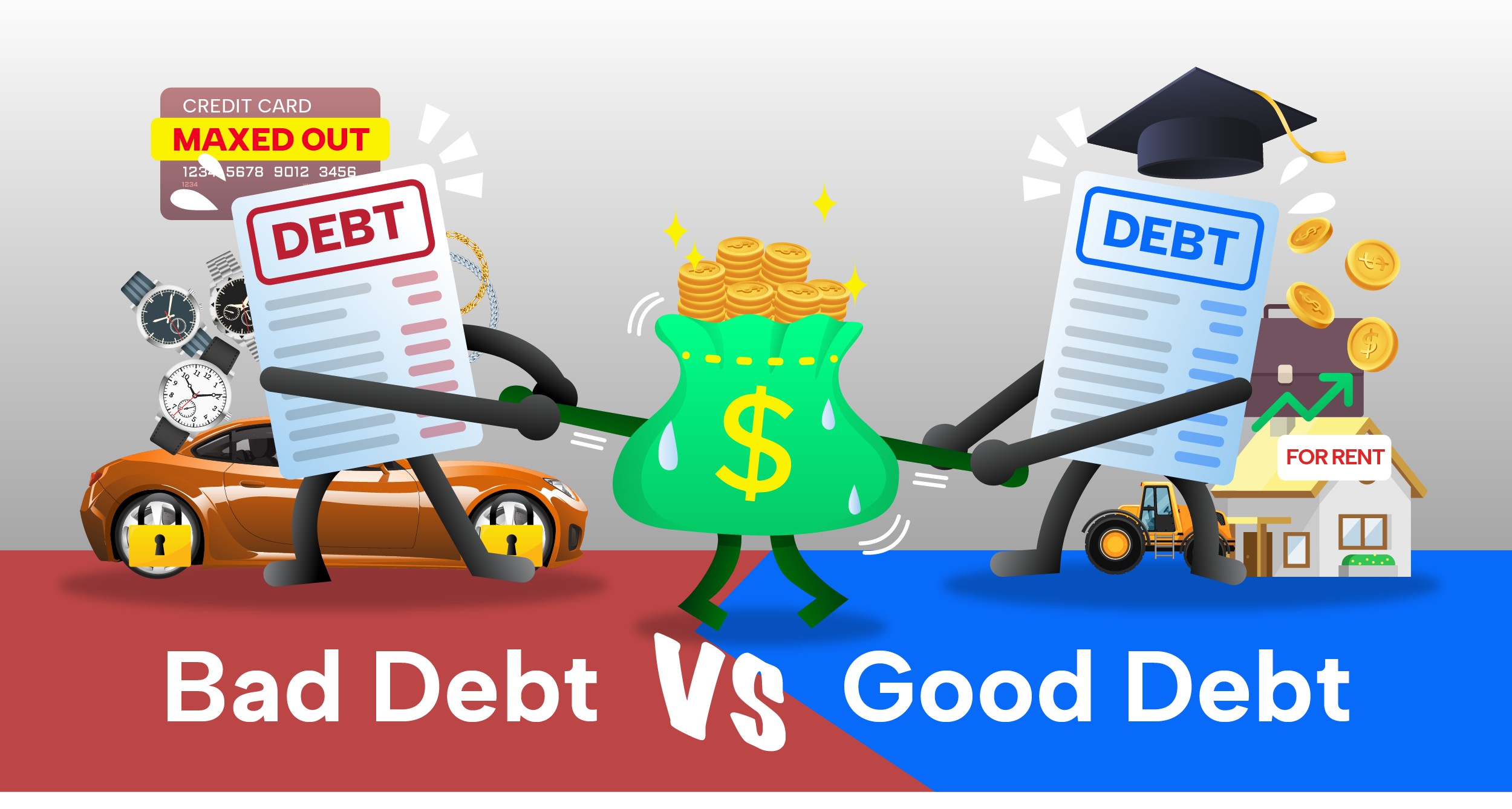
Debt, often perceived solely as a financial burden, isn’t always detrimental. In the intricate world of personal finance, a crucial distinction exists between **good debt and bad debt**, a concept that can profoundly influence one’s long-term financial health and wealth accumulation. Understanding this difference is not about embracing debt carelessly, but rather about leveraging borrowed money strategically to achieve financial goals, while avoiding the pitfalls that can lead to spiraling financial distress. It’s a nuanced perspective that encourages thoughtful borrowing, viewing certain forms of debt as investments rather than merely obligations.
### Good Debt: An Investment in Your Future
**Good debt** is essentially money borrowed to acquire an asset that has the potential to **increase in value, generate income, or improve your long-term financial position and earning potential**. It’s a strategic leverage that, when managed responsibly, can contribute positively to your net worth. The key characteristic of good debt is that the return or benefit derived from the borrowed money typically outweighs the cost of the interest paid.
One of the most common examples of good debt is a **mortgage** on a primary residence. While it represents a significant liability, a home is generally considered an appreciating asset over the long term. As you pay down the mortgage, you build equity, which contributes directly to your net worth. Furthermore, owning a home can offer tax benefits and provide stability that renting often doesn’t. Of course, a mortgage only qualifies as “good debt” if the home is purchased at a reasonable price, the interest rate is manageable, and the buyer can comfortably afford the monthly payments. Over-leveraging on a depreciating asset would shift this into problematic territory.
—
Another prime example of good debt is **student loans** used for higher education or specialized training. While student loans can be substantial, the investment in education often leads to increased earning potential over a lifetime. A degree or certification from a reputable institution can open doors to higher-paying jobs, career advancement, and greater job security. The cost of the debt is typically justified by the enhanced income stream and professional opportunities that education provides. However, this holds true primarily for degrees that have a clear return on investment; borrowing excessively for a degree with limited job prospects at high interest rates could easily turn this into a less favorable form of debt.
Finally, **business loans** can also fall under the category of good debt when used wisely. Borrowing capital to start or expand a business, purchase essential equipment, or invest in revenue-generating assets can lead to increased profits and business growth. For instance, a small manufacturing company taking out a loan to buy a new, more efficient machine might see its production capacity increase significantly, leading to higher revenue that far outstrips the loan’s interest payments. The defining factor here is the potential for the borrowed funds to generate a return that accelerates wealth creation.
—
### Bad Debt: A Drain on Your Resources
In stark contrast, **bad debt** is money borrowed to finance **depreciating assets or consumption, particularly at high interest rates, with little to no potential for a positive financial return**. This type of debt typically diminishes your net worth over time, creates financial strain, and traps individuals in a cycle of interest payments that offer no tangible benefit. The common thread among bad debts is that the item purchased loses value quickly, or the interest rate is so high that it becomes an unsustainable burden.
The most notorious example of bad debt is **credit card debt**, especially when carrying a balance month-to-month. Credit cards often come with exorbitant annual percentage rates (APRs) that can range from 15% to well over 25%. Using credit cards to finance everyday consumption—like groceries, entertainment, or clothing—that provides no lasting value, means you are effectively paying a premium for items that are gone or depreciated almost immediately. The interest compounds rapidly, making it incredibly difficult to pay down the principal, turning a small purchase into a much larger, ongoing financial drain.
—
Another common form of bad debt is **loans for rapidly depreciating assets**, particularly certain types of vehicles. While a car might be a necessity, financing an expensive vehicle that loses a significant portion of its value the moment it’s driven off the lot, especially with a long loan term and high interest, is a classic example of bad debt. The asset’s value diminishes far faster than the loan principal, leaving the borrower “underwater” – owing more than the car is worth. While necessary for transportation, opting for an overly expensive car on an extended loan can be a significant drag on financial progress.
Finally, **payday loans or title loans** represent some of the most egregious forms of bad debt. These short-term loans often target individuals in desperate financial situations and come with astronomical interest rates, sometimes in the triple digits. While they offer quick cash, their structure is designed to trap borrowers in a cycle of debt, as the fees and interest quickly outweigh the principal, making repayment incredibly difficult. These are almost always detrimental to financial health and should be avoided at all costs.
—
### Navigating the Nuances and Making Informed Choices
It’s important to recognize that the line between good and bad debt isn’t always rigid. Context matters significantly. A student loan, generally good, can become bad debt if it funds a degree with no market value or if the student drops out without transferable skills. Similarly, a mortgage can become bad debt if one buys a home at an inflated price in a declining market or takes on payments far beyond their means. The key isn’t to avoid all debt, but to make **informed, intentional borrowing decisions**.
When considering any debt, ask yourself:
* Will this debt help me acquire an appreciating asset or increase my earning potential?
* Is the interest rate reasonable and affordable?
* Can I comfortably manage the payments without financial strain?
* Does this debt lead to consumption of a rapidly depreciating item?
Understanding the difference between good debt and bad debt is a cornerstone of sound financial literacy. By leveraging good debt strategically as an investment and diligently avoiding or aggressively paying down bad debt, individuals can build a stronger financial foundation, accelerate their path to wealth, and secure their long-term financial well-being. It’s about smart choices today creating a more prosperous tomorrow.