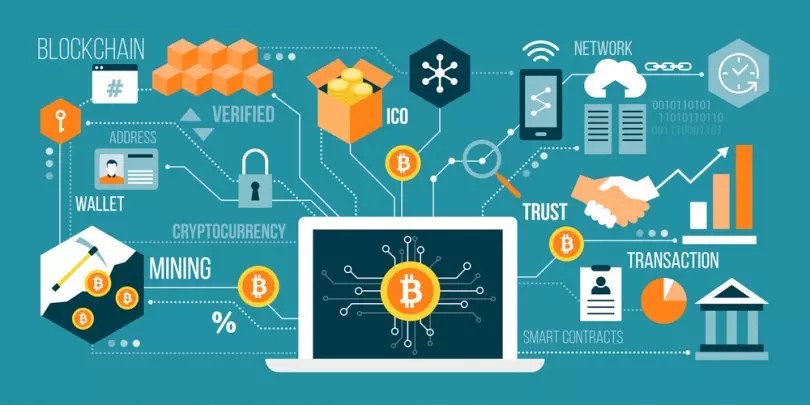
In the contemporary lexicon of technology, the term “blockchain” often conjures immediate associations with volatile digital currencies like Bitcoin and Ethereum, speculative trading, and the enigmatic world of decentralized finance. This pervasive link, while historically accurate given Bitcoin’s genesis of the technology, dramatically undersells the revolutionary potential of blockchain. Far from being merely the backbone of cryptocurrency, blockchain is a foundational innovation, a distributed ledger technology with profound implications for transparency, security, and efficiency across virtually every industry. To truly grasp its transformative power, one must look beyond the digital gold rush and delve into the core principles that make blockchain a versatile tool for re-engineering trust in a digital age.
At its essence, a blockchain is a decentralized, immutable, and distributed digital ledger. Imagine a shared, continuously updated database that isn’t controlled by any single entity, but rather maintained by a network of computers. Every time a transaction or piece of data is added, it’s bundled into a “block,” which is then cryptographically linked to the previous block, forming a “chain.” Once a block is added, it’s incredibly difficult, if not impossible, to alter or remove the information without invalidating the entire chain, a feature known as immutability. This inherent security and resistance to tampering arise from its distributed nature: every participant in the network holds a copy of the ledger, and any proposed changes must be validated by the majority, making it exceptionally resilient to fraud or single points of failure. This triumvirate of decentralization, immutability, and distribution is what gives blockchain its revolutionary potential far beyond financial transactions.
One of the most significant applications of blockchain beyond cryptocurrency lies in **supply chain management**. Traditional supply chains are often opaque, fragmented, and prone to fraud or inefficiencies. It can be challenging to track a product’s journey from raw material to consumer, verify its authenticity, or pinpoint the source of a defect. Blockchain offers a solution by creating a transparent, immutable record of every step a product takes. From tracking the origin of ethical diamonds to monitoring the freshness of produce or verifying the authenticity of luxury goods, a blockchain-powered supply chain can provide end-to-end visibility. Each movement, each quality check, each change of ownership becomes a verifiable transaction on the ledger, enhancing trust among participants, reducing counterfeiting, and enabling rapid recalls if an issue arises. This level of granular traceability is a game-changer for industries seeking greater accountability and consumer confidence.
Another area poised for significant disruption is **digital identity and data management**. In an era of rampant data breaches and identity theft, individuals struggle to control their personal information. Blockchain offers the promise of “self-sovereign identity,” where individuals own and control their digital identities, granting permission for specific data points to be shared on a need-to-know basis, without relying on centralized databases. Imagine a future where your medical records, academic credentials, or professional certifications are stored on a blockchain, accessible only by you, but verifiable by authorized parties instantly and securely. This paradigm shift could revolutionize how we interact with online services, conduct background checks, and protect our privacy.
The realm of **intellectual property and digital rights management** also stands to benefit immensely. Artists, musicians, writers, and creators often face challenges in proving ownership, tracking usage, and ensuring fair compensation for their digital works. Blockchain can provide an immutable timestamp and proof of ownership for digital assets, creating a transparent ledger for copyrights and royalties. Smart contracts—self-executing contracts with the terms of the agreement directly written into lines of code on the blockchain—can automatically disburse royalties to creators every time their work is accessed or used, streamlining complex payment processes and ensuring creators are fairly compensated without intermediaries.
Furthermore, blockchain holds significant promise for **voting systems and public records**. The technology’s inherent transparency and immutability make it an attractive candidate for creating tamper-proof voting systems that could enhance public trust in election outcomes. Similarly, land registries, birth certificates, and other critical public records could be digitized and secured on a blockchain, reducing fraud, improving accessibility, and streamlining bureaucratic processes that are currently cumbersome and prone to error. While implementation faces political and logistical hurdles, the technological foundation for more secure and transparent record-keeping is robust.
Finally, the concept of **decentralized autonomous organizations (DAOs)** showcases blockchain’s potential for new governance models. DAOs are organizations structured by rules encoded as smart contracts on a blockchain, run without central management. Decisions are made by members who vote on proposals, with votes recorded transparently on the ledger. This model could redefine corporate governance, community organizations, and even certain types of political structures, offering a more democratic and transparent way for groups to collaborate and manage shared resources.
In conclusion, while cryptocurrency provided the initial spark and public awareness, blockchain technology is undeniably more than just digital money. Its fundamental attributes—decentralization, immutability, and transparency—offer compelling solutions to long-standing challenges across diverse sectors. From creating verifiable supply chains and empowering self-sovereign digital identities to streamlining intellectual property rights, enhancing public records, and fostering new models of governance, blockchain is a versatile innovation poised to redefine trust and efficiency in an increasingly digitized world. As industries continue to explore its profound capabilities, the true revolution of blockchain will unfold, far exceeding its initial, narrowly defined perception.